Modified Snow Shovel
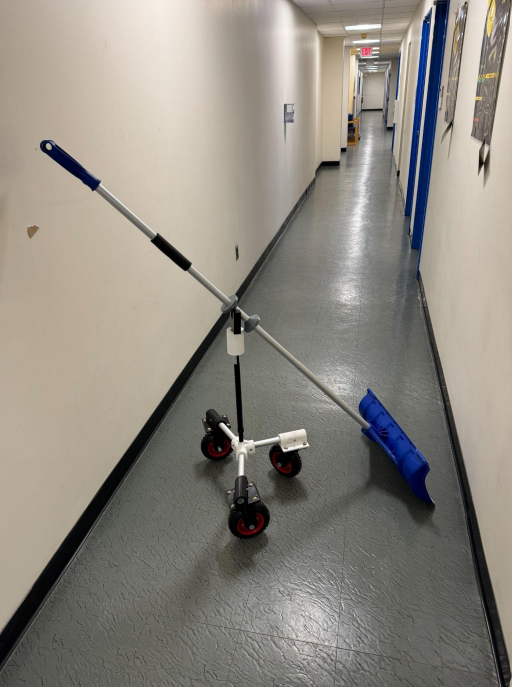
In the fall of 2024 I took ME140: Inventive Design at Tufts. My team — Will Baise, Emma Gonzalez, Tyler Mackowski, Varun Suresh Nair, and I — set out to redesign the snow shovel for people who struggle with traditional ones: older adults, anyone with back or joint issues, or just anyone who isn't especially strong. Snowblowers solve the effort problem, but they're expensive and bulky, so we wanted something that kept a shovel's low cost and small footprint while cutting out most of the physical strain.
We set ourselves a few hard targets going in: under $100, easy to store in a small space, and usable without much strength. We were designing for a fairly standard driveway — a flat, few-hundred-square-foot asphalt surface with a few inches of light snow — and capped the device itself at around 35 lbs.
Exploring Concepts:
We started with three very different ideas: a small remote-controlled plow robot (basically a Roomba with a blade on the front), a modular electric shovel built around an existing cordless snow shovel product, and a manual shovel redesigned around a fulcrum and wheels.
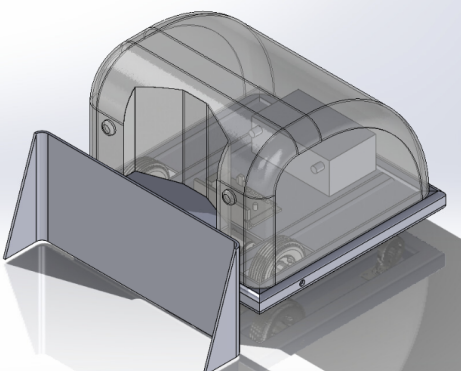
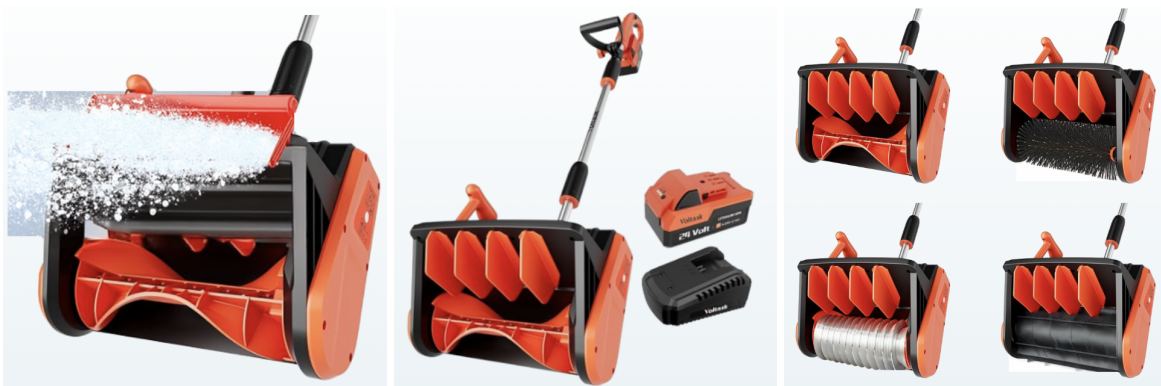
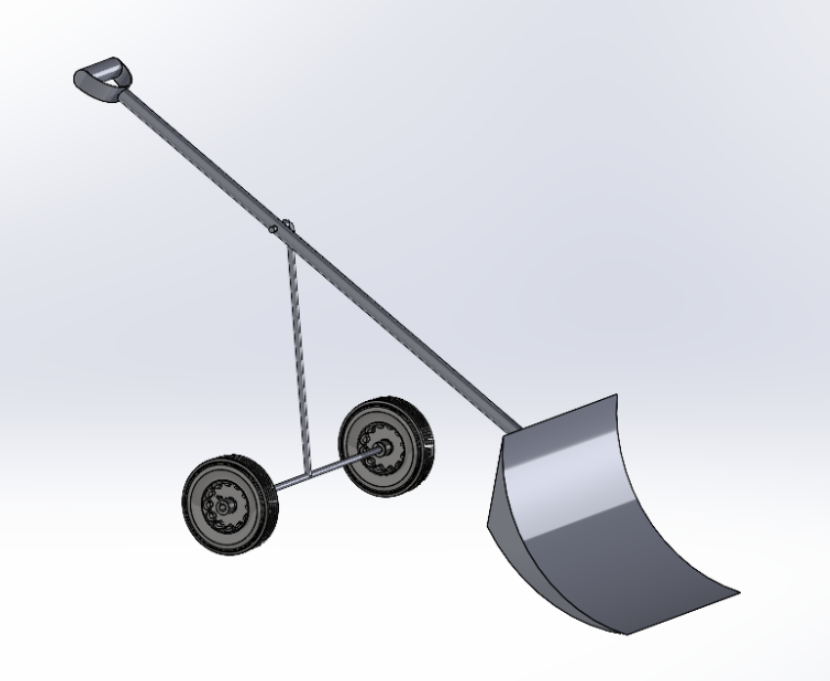
Talking to homeowners made the decision for us. People kept saying they wanted something entirely mechanical for easier maintenance.
The Final Design:
The idea is pretty simple: mount the shovel blade on a fulcrum with a set of wheels underneath, so instead of lifting a scoop of snow with your back and arms, you push down on the handle and let the pivot do the lifting, then roll the whole thing to where you want to dump the snow. Pushing down is a lot easier on your body than pulling up, and the wheels mean you're rolling the load instead of carrying it.
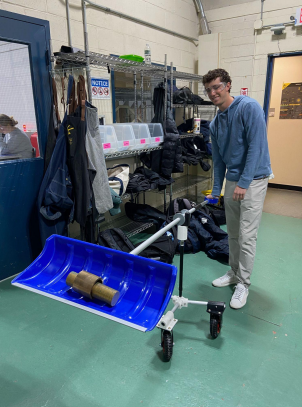
We built the prototype around an aluminum blade, a stainless steel fulcrum, high-strength plastic handles with rubber grips, and polyurethane wheels on steel axles — aiming for something durable but still light enough to lift by hand when it wasn't rolling. All told it came in around $80 in parts and assembly, comfortably under our $100 target.
Testing:
We tested in a Tufts hallway rather than an actual snowy driveway, so we improvised: we balled up paper to stand in for snow and tested whether the shovel could scoop and move it, which it did without issue. We also loaded the blade with a 9 lb weight (about what a full scoop of snow would weigh) and each took turns raising and lowering it to see how much effort it actually took. It was almost entirely an arm motion — barely any back involvement — and one of my teammates, Varun, put it best: "I didn't feel anything at all — there was no stress on my back."
Limitations & Future Work:
We never actually tested the shovel in real snow, and we didn't get to test it on the older or less able-bodied users it's actually designed for — both came down to running out of time in the semester. The prototype also ended up heavier than we wanted, mostly because the wheels we picked for a smooth, sturdy roll weren't especially light. If I kept working on this, the next steps would be real outdoor snow testing and a pass at redesigning the wheels to cut weight without giving up how well they roll.
The full final design proposal, with the stakeholder analysis, decision matrix, and testing writeup, is below:
Open the full final design proposal